
Key Insights & Takeaways
Another round of graduates from Mountain Comprehensive Health Corporation (MCHC) has completed the RAISE program, which was launched in 2023 to help workers in Kentucky pursue opportunities in the health care field and address the industry labor shortage in the state.
Established through a $500,000 grant to promote health care workforce development funded by UnitedHealthcare (UHC) and created in collaboration with Advocates for Community Health (ACH), this represents one of many investments the two organizations have partnered on to support Federally Qualified Health Centers (FQHCs) across the nation.
Health care workforce shortages have emerged as one of the defining challenges facing the U.S. health system.
When care providers struggle with recruitment and retention, patients often suffer from less access to care, longer wait tumes, and worse health outcomes. For hospitals, clinics, and others delivering care, the result can increase employee burnout, greater administrative burden, and reduce organizational sustainability.
At the same time, demographic and health trends are increasing demand for services — placing additional strain on an already stretched health care workforce that is projected to lack the labor numbers necessary to deliver the highest-quality care.
If current trends continue through 2038, the United States may have an overall shortage of more than 140,000 physicians, 108,000 registered nurses, 60,000 physical therapists, and 43,000 psychiatrists, among other specialties, according to the latest projections from the National Center for Health Workforce Analysis (NCHWA).1
Adding to the challenge is that this disparity is not distributed evenly across the nation. While states such as California, Pennsylvania, and Texas may maintain labor surpluses in key health roles looking forward to 2028, others including New York, Georgia, Illinois Tennessee, and Kentucky could be confronted with significant shortages.2
Even within states, large population centers are generally expected to fare better than rural areas.
"Rural and underserved communities face the steepest shortages," stated the American Hospital Association in a recent report.3 "More flexible staffing, virtual models and local workforce development will be essential to avoid widening inequities."
Developing a new generation of health workers in Kentucky
For the past several years, Mountain Comprehensive Health Corporation (MCHC) has been doing its part to address this shortage in Kentucky.
MCHC has now helped more than 200 employees receive training, degrees, and certifications through its workforce development program RAISE (Reach, Achieve, Inspire, Support, Employ). Launched in 2023 through a $500,000 grant funded by UHC and created in partnership with ACH, RAISE was designed to empower current workers with the tools, knowledge and opportunities needed to advance within the company.
"We don't have a shortage of dedicated people who want to serve their communities. We have a shortage of opportunities. RAISE is helping change that."
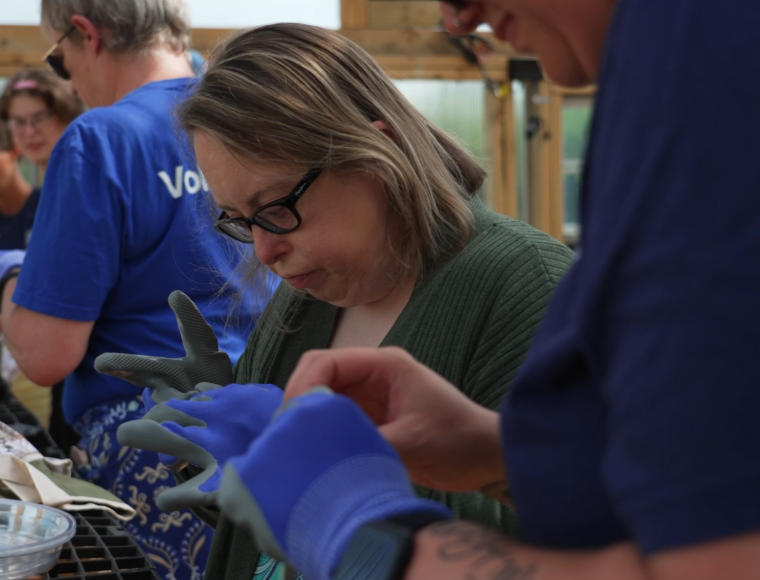
In May, the most recent round of graduates completed the program. Some got their start at MCHC in areas such as medical assisting, reception, housekeeping, and other frontline positions. And now they will be able to move into the new roles they've pursued without leaving their communities — many of which are rural and don't always offer a wide range of stable employment options.
"We don’t have a shortage of dedicated people who want to serve their communities," said Mike Caudill, CEO of MCHC. "We have a shortage of opportunities. RAISE is helping to change that.”
Last December, the White House approved $212 million in federal funding to support rural health communities in the state, which at the end of 2025 had nearly 1.8 million people residing in areas designated as official “Health Professional Shortage Area” for primary care providers by the U.S. Department of Health.4
The state legislature has also introduced multiple bills this year to address the challenge, and for eastern Kentucky — where many communities face deep poverty, chronic health conditions, and limited access to care — the importance of these initiatives is about more than simply filling vacancies.
MCHC’s approach offers a solution that helps ease the burden on the state overall while supporting those within the local community. By investing in the people already committed to serving their neighbors, the result is a stronger health care workforce and a future where rural residents can build meaningful, fulfilling careers without leaving the place they call home.
Building a strong partnership with Advocates for Community Health
RAISE is just one of the ways that UHC has been working with ACH to improve health care delivery across the country.
Since 2023, UnitedHealthcare has invested $3.1 million to support ACH's multi-year plan to equip health center leaders with more collaborative, strategic, and developmental opportunities. Two key initiatives included peer learning collaborations — which provided opportunities for networking and sharing industry knowledge — and virtual sessions focused on emerging health issues.
This funding also supported ACH's innovative Community Health Entrepreneur Challenge, a health care grant program that awarded $500,000 to MCHC along with four other FQHCs that submitted winning proposals to promote system change and reduce health disparities.
In addition to MCHC, the challenge has provided funding for several other FQHC initiatives, including:
- Mariposa Community Health Center’s proposal to use AI and machine learning to improve patient care in Arizona.
- Lowell Community Health Center’s solution to address health care workforce gaps in Massachusetts through culturally proficient learning.
- Columbia Basin Health Association’s program to more efficiently and effectively deliver care to younger patients in Washington.
- Morris Heights Health Center’s plan to provide older adults in New York with a wellness home and care necessary to age with dignity.
Committed to supporting FQHCs across the nation
Federally Qualified Health Centers play a vital role in the communities they serve and the entire U.S. health care system.
With more than 1,500 organizations — and over 17,000 individual sites — FQHCs provide affordable care to up to 1 in 7 people nationwide and up to 1 in 3 rural residents, according to the (NACHC).5 Collectively, this makes these essential health centers the largest primary care network in the nation — and a major focus for ongoing investment from UHCCS.
"FQHCs are the cornerstone of care for the Medicaid and underserved populations in many communities," said Catherine Anderson, senior vice president of health optimization strategy at UnitedHealth Group.
"Our focus is: How do we invest in them — and how do we make those investments meaningful?"
Through initiatives like RAISE, these key ongoing partnerships are helping FQHCs strengthen their workforce for the future, while helping people in communities across the country discover new career opportunities that they were previously unable to pursue.
"Life happens, and for one reason or another, people had to give up on their dreams,” said Caudill of MCHC. “RAISE makes those dreams possible, affordable, and achievable again."
Sources
- National Center for Health Workforce Analysis (NCHWA), Health Workforce Projections, December 2025
- Mercer, “Future of the U.S. Healthcare Industry, Healthcare Labor Market Projections by 2028”
- American Health Association, "Health Care Workforce: A System Under Pressure, Poised for Reinvention"
- Kaiser Family Foundation, “Primary Care Health Professional Shortage Areas (HPSAs)”
- National Association of Community Health Centers, “What is a Community Health Center?”